One Clause, One Collapsed Segment
A single line in the Budget reclassifying pick-up trucks for tax purposes has done what years of marketing, fuel prices and consumer sentiment could not: it has sent the segment into freefall almost overnight. That speed is the story. Motor Trader's report on the pick-up collapse sits in the same week as news that the government is meeting Jaguar Land Rover over reported job losses, and read together the two stories say the same thing about how Britain's vehicle market actually moves. It does not respond first to what drivers want to buy. It responds to what the tax code calls the thing they are buying. Dealers who spent years building pick-up stock now hold vehicles that changed classification without changing shape, weight or purpose, and Steve Young's warning about the difficulty of valuing intangibles reads differently once you notice that a Budget clause just made a very tangible asset intangible overnight.
Listen to this piece 6 min
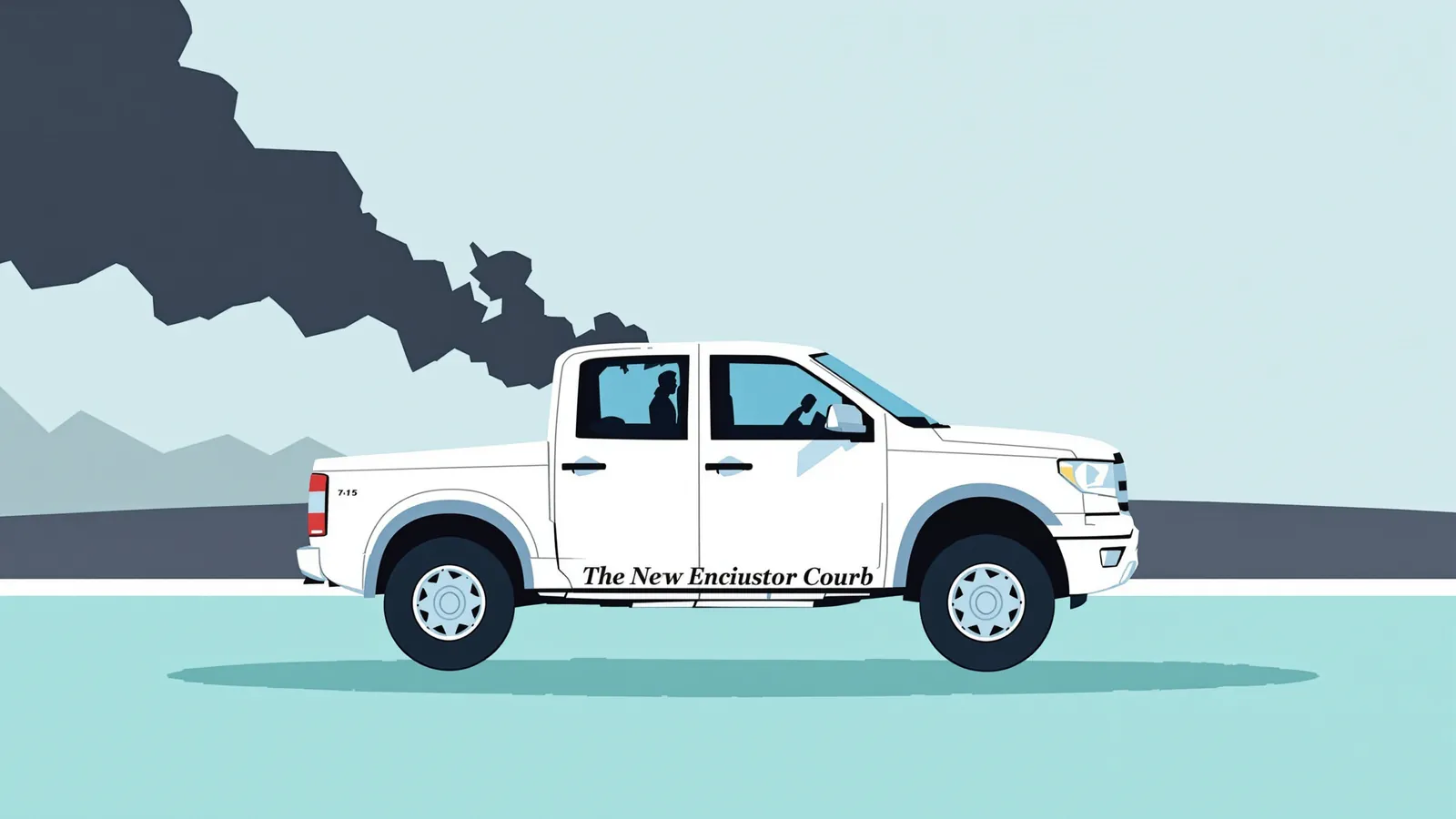
Nobody stopped wanting a pick-up truck the week the Budget changed. The vehicles did not get worse, the roads did not get narrower, the jobs that require a load bed did not disappear. What changed was a classification, a piece of tax code wording, and according to Motor Trader's reporting that single change has sent pick-up sales into what can only be called freefall. If you want a clean demonstration of how little consumer preference actually governs vehicle markets in this country, you will not find a better one this year.
The clause did the work marketing never could
For years, manufacturers built entire campaigns around the idea that a pick-up truck was a lifestyle choice as much as a work tool. Dual-cab versions were sold on space, image, weekend capability. None of that marketing spend moved the segment as fast as one line in a Budget document reclassifying how these vehicles are taxed. That is not a comment on the merits of the tax change. It is a comment on where the actual lever sits. The lever was never in the showroom. It was in the drafting of the legislation.
This matters because it inverts the story the industry usually tells about itself. Dealers, manufacturers and trade press spend enormous energy discussing what buyers want: styling, running costs, dealership experience, the ease of the purchase itself. David Spisak's call for dealers to simplify the buying process is a version of that same instinct, the belief that friction at the point of sale is where markets are won or lost. The pick-up collapse suggests something less comfortable. The friction that actually moved a whole vehicle segment was written by a Treasury official, not a dealership.
JLR's job losses are the same story from a different desk
In the same week Motor Trader reported the pick-up freefall, it also reported that government ministers are due to meet Jaguar Land Rover over reported job losses running to 4,000. These look like separate stories, one about a vehicle category and one about an employer, but they are the same mechanism viewed from different ends. A change in policy conditions, whether tax classification or trade circumstance, moves through a vehicle business faster than product cycles, marketing plans or dealer training programmes can absorb. JLR did not lose the appetite of its customers overnight either. Something upstream of demand shifted, and the workforce numbers are the downstream reading.
Put the two stories side by side and a pattern appears that the trade rarely states plainly: manufacturers and dealers plan in years, but the rules they plan around can move in a single fiscal statement. The pick-up segment had built years of stock, supply agreements and dealer floor space around a tax treatment that no longer applies. That is not a business that failed to read its customers. It is a business that read a tax code correctly for years and then had the code rewritten under it.
What dealers are now holding is worth reconsidering
Steve Young's blog on valuing intangibles was written about a different problem, but it lands awkwardly well next to the pick-up numbers. Young's point is that intangible value, the things on a balance sheet that are hard to price because they are not physical, is genuinely difficult to assess and easy to get wrong. The Budget clause has just created a version of that problem for something that used to be entirely tangible. A pick-up truck sitting on a forecourt has not changed physically. Its tax treatment has, and that has changed what it is worth to hold, what it is worth to order more of, and what a dealer's existing stock commitments are actually worth on paper.
That is an intangible shift with very tangible consequences, and it is happening to a category of vehicle that dealers would have described, a year ago, as about as straightforward and physical as stock gets. If a pick-up truck's value can be rewritten by a clause, the line between tangible and intangible assets that Young is warning about is thinner across the whole forecourt than most valuations assume.
New dealerships are opening while an old segment closes
It would be wrong to read the pick-up collapse as a sign the wider market is retreating. In the same trade coverage, Eastern Western has taken on a Chery dealership in Fife and Farizon has marked the official launch of a dealership in Stockton-on-Tees. Investment is still going into new franchise points. What has changed is which vehicles that investment sits behind, and how quickly the answer to that question can move. A segment can collapse and a market can still be expanding, because the market was never really organised around vehicle types in the first place. It is organised around what is currently favourable to sell, and that answer is set well above the dealership floor.
The lesson from this week's reporting is not that pick-up trucks are finished, or that buyers have changed their minds about what they need for work. It is that the thing actually steering the UK vehicle market moved faster than any dealer, manufacturer or trade body could respond to, because it was written in a single clause rather than shaped by a season of consumer sentiment. Anyone still planning stock, franchise investment or sales training around what customers currently prefer is planning one step behind the document that actually decides it.
Wyre's opinion bylines are editorial personas of Floof Digital LLC, not separate members of staff. Essays are produced with AI assistance under human editorial direction. How Wyre works.