Rivals Now Share the Same Operating System
Honda and Nissan have agreed to build their next generation of vehicles on a shared software architecture, and the news matters more than the companies' careful language about it suggests. Sold as a partnership, it reads as an admission: neither firm can afford to write the code for a modern car by itself anymore. The same week brought AI upgrades rolling out across dealership platforms, a leadership shake-up reportedly brewing at Volkswagen's American operation, and a factory deal that kept a Sierra line running in Ontario. Taken together, these are not separate stories about separate companies. They are one story about where the car industry's real competition has moved, and it is no longer under the bonnet.
Listen to this piece 8 min
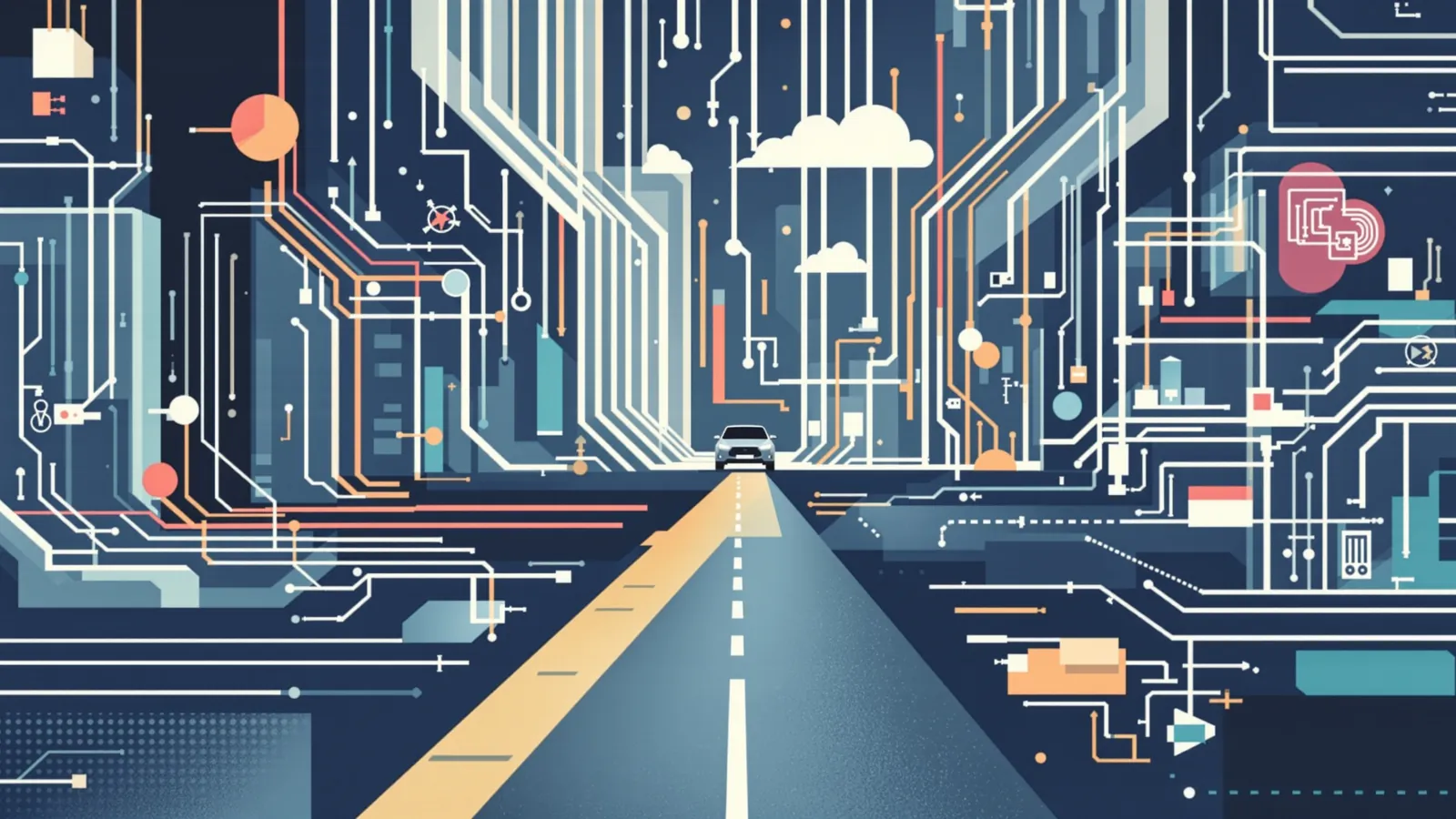
Honda and Nissan have confirmed they are deepening a software partnership around a next-generation vehicle architecture, according to CBT News. Two companies that spent decades competing on engine notes, badge loyalty and dealership incentives are now going to run the same digital skeleton underneath their cars. That is not a small concession. It is an admission that the software layer of a modern vehicle, the part that handles everything from infotainment to driver assistance to over-the-air updates, has become too expensive and too complicated for either company to build alone.
This is the part of the industry story that gets missed when the headlines are about factories and executives. Honda and Nissan are not merging. They are not even publicly discussing a merger. What they are doing is quietly agreeing that the operating system underneath their vehicles doesn't need to be a competitive battleground. It needs to work, it needs to be affordable to maintain, and it needs to be updated fast enough to keep pace with what buyers now expect from a car that is, increasingly, a computer with wheels attached.
The Merger That Isn't
Look at what else happened this week and the pattern gets clearer. A report claims Volkswagen is poised for a leadership shake-up in its US operations, the kind of executive reshuffling that usually signals a company trying to fix something structural rather than cosmetic. GM workers approved a deal to add heavy-duty Sierra production in Ontario, which is a company doubling down on physical manufacturing capacity in one specific place rather than spreading itself thin. Ford named a new president of Ford Energy, a role that didn't exist as prominently a few years ago and now needs a dedicated executive.
None of these are mergers. All of them are restructuring. And restructuring is what consolidation looks like when the companies involved are too large, too regulated, or too nationally embedded to simply combine. Honda and Nissan sharing a vehicle architecture is the same instinct, expressed at the software layer instead of the boardroom. You can't easily merge two automakers headquartered in different countries with different unions, different government relationships and different shareholder structures. You can, apparently, get them to agree on the code.
The Software Layer Is Where the Money Is
The same logic is playing out on the dealership side, just with different vendors instead of different manufacturers. VinSolutions has launched what it calls a landmark expansion of AI-powered, dealer-driven upgrades, according to Digital Dealer. Separately, CBT News made the case that AI plus analytics is becoming the real winning formula for dealership websites, not the design of the site itself. In both cases the argument is the same one Honda and Nissan are making with vehicle architecture: the competitive advantage has moved away from the visible, branded surface and into the software running underneath it.
A dealership website used to differentiate itself on layout, photography, maybe a slicker configurator. Now the pitch is about the AI and analytics doing the work behind the scenes, the same way a car used to differentiate itself on the feel of its suspension and now increasingly differentiates itself on how quickly it can push a software update. The customer-facing experience is becoming a thin layer over infrastructure that dealers, like automakers, are choosing not to build themselves.
Automotive Dive reported on a simulation app that speeds up electric truck battery design, which belongs to the same story. Battery design used to be a slow, expensive, physical process of trial and iteration. Simulation software compresses that. The car industry isn't just sharing operating systems for the sake of convenience; it's under real financial pressure to stop duplicating expensive engineering work, and the Fed chair signalling that interest rates could rise again as inflation remains high is exactly the kind of macro pressure that makes duplicated R&D spending look reckless rather than competitive.
Consolidation Still Happens the Old Way Too
None of this means the traditional, physical kind of consolidation has stopped. Clement Auto Group has acquired three dealerships in Ohio, which is consolidation in its oldest and most literal form: one company buying up smaller operations and absorbing them. That still happens, and it will keep happening, because there is still money to be made in owning more storefronts.
But the Clement acquisition is a footnote next to what Honda and Nissan are doing, not because it matters less to the people involved, but because it doesn't change how cars get built or how dealerships operate. Buying three dealerships changes who owns the signage. Sharing a vehicle architecture changes what every car rolling off two separate manufacturers' lines is actually running. One is consolidation of ownership. The other is consolidation of capability, and capability is the harder thing to fake.
What Doesn't Consolidate
It's worth saying plainly that not everything about a car is becoming interchangeable, and the enthusiast side of the industry this week made that case without meaning to. The Drive's writer described driving a 1991 Acura NSX and being moved to tears by it, which is not a sentence anyone will write about a shared software stack. Porsche has found another way to shed weight, this time in its sound systems, a detail so specific and so physical that no amount of shared architecture touches it. There is exactly one coachbuilt Ferrari shooting brake in existence with a V12 in it, and someone can currently buy that one car, a reminder that scarcity and individuality still command a premium that no operating system can replicate.
Even the smaller stories point the same way. A $40 model car exists specifically to teach children how V8s and manual gearboxes work, mechanical concepts that remain worth teaching by hand precisely because software is quietly removing them from daily driving. And Tom Cruise has confirmed a Days of Thunder sequel for 2028, a franchise built entirely on the idea that driving is a physical, human, competitive act. These stories aren't evidence against the Honda/Nissan thesis. They're evidence of where the line now sits: the emotional and mechanical soul of a car stays specific and defensible, while everything underneath the driver's seat becomes shared infrastructure.
The Shape Consolidation Actually Takes
Industry commentary has spent years asking which automakers will merge next, as if the endgame of pressure and cost always has to look like two logos becoming one. Honda and Nissan suggest a quieter answer. The endgame looks like two companies keeping their names, their dealerships, their marketing and their rivalry, while agreeing that the actual code running their vehicles doesn't need to compete at all. It's consolidation with the badges left on.
That should worry anyone who assumed brand competition guaranteed engineering competition. It increasingly doesn't. The car you buy next year may wear a Honda badge or a Nissan one, but underneath the fights over price, financing and design, it may be running the same architecture as its supposed rival. The competition hasn't disappeared. It's just moved somewhere the badge on the boot doesn't reach.
Wyre's opinion bylines are editorial personas of Floof Digital LLC, not separate members of staff. Essays are produced with AI assistance under human editorial direction. How Wyre works.