The Buyback That Borrowed Its Own Applause
A share buyback used to be read as a signal: a company generating more cash than it could usefully reinvest, handing the surplus back to owners. That signal has been hollowed out. When the buyback is funded not by earnings but by freshly issued debt, the company isn't demonstrating strength, it's borrowing the appearance of it. The balance sheet gets weaker at the exact moment the share count gets smaller, and the resulting bump in earnings per share tells you nothing about whether the underlying business is actually worth more. This piece argues that debt-funded buybacks should be treated as a warning sign rather than a vote of confidence, because they substitute financial engineering for the thing buybacks were supposed to prove.
Listen to this piece 6 min
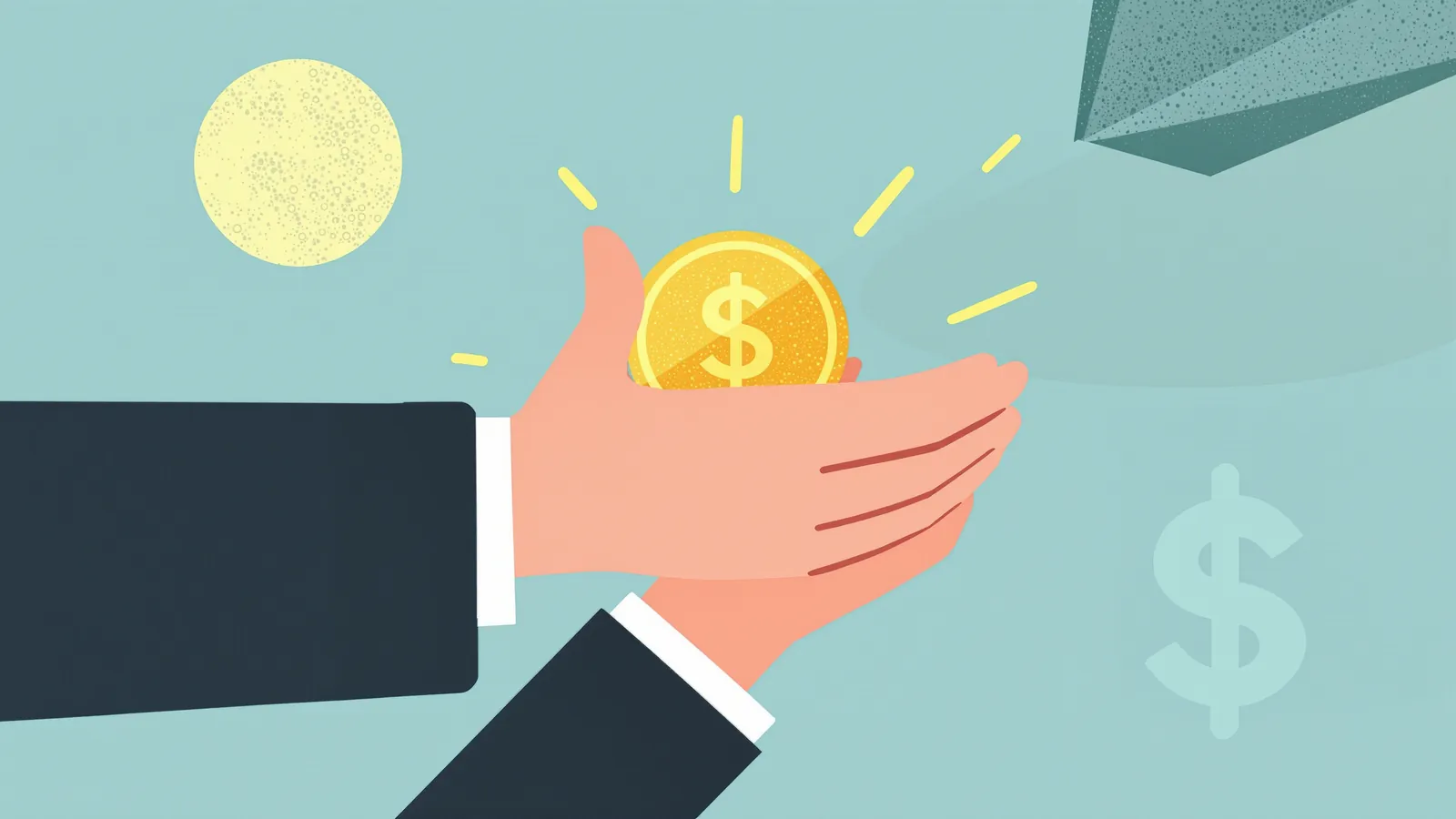
There is a simple test that used to separate a healthy buyback from a cosmetic one: where did the money come from. If it came from operating cash flow, the company was telling shareholders something true, that the business threw off more cash than management could find productive uses for, and returning it was the honest move. If the money came from a bond issue instead, the company is telling shareholders something quite different, and far less reassuring, even though the press release reads the same either way.
The mechanics are not complicated, which is part of why the trick works. Borrow money, use it to retire shares, watch the earnings-per-share figure rise because the same profit is now divided among fewer shares outstanding. No new value has been created. The business has not grown, sold more, or become more efficient. What has changed is the capital structure: more debt sitting on top of the same operations, and a smaller equity cushion underneath it. The company has made itself look better on one metric by making itself more fragile on every other one.
The applause was never about the number
Buybacks earn goodwill from markets because they are supposed to encode a judgement: management, who know the business better than anyone outside it, believe the shares are worth more than the market is paying, and they are willing to put real cash behind that belief. That is what the applause was for. It was never really about the earnings-per-share arithmetic, which is just a byproduct, it was about the implied confidence of a management team choosing to use its own money this way.
Debt-funded buybacks keep the gesture and discard the meaning. The company has not put its own money anywhere, it has put a lender's money toward a short-term equity effect. The confidence being signalled is confidence that credit markets will keep extending terms, not confidence that the underlying business is undervalued. Those are different claims, and conflating them is exactly the sleight of hand that makes this manoeuvre attractive to management teams under pressure to show something, anything, moving in the right direction.
Who actually benefits
It is worth asking plainly who gains when a buyback is financed this way. Executives whose compensation is tied to earnings-per-share targets benefit immediately, because the metric moves regardless of operational performance. Shareholders who sell into the buyback benefit, because they are cashing out at a price partly propped up by borrowed money that someone else will eventually have to service. The shareholders who remain, and the bondholders who extend the new credit, inherit a company carrying more obligations against the same stream of operating cash.
That asymmetry is the whole story. The people making the decision to borrow for a buyback are rarely the people left holding the increased risk once the debt comes due. A management team can hit its earnings-per-share target this year and be gone, through promotion or departure, well before the refinancing conversation becomes urgent. The incentive to use debt this way is strongest precisely when the long-term health of the business is weakest, because a declining or stagnant operation has the least organic cash flow to fund a buyback honestly and the most pressure to produce a headline number anyway.
Debt doesn't disappear because a stock price moved
The thing about borrowed money is that it has terms. It has to be serviced out of future cash flow, and that servicing obligation does not care whether the company used the proceeds to build a factory or to shrink its share count. Either way, interest payments are now fixed costs sitting ahead of everything else in the claims on the business, and they have to be met in good years and bad. A buyback funded this way converts a discretionary decision, how to use spare cash, into a mandatory one, how to service new debt, and that conversion is permanent in a way the original cash would not have been.
This matters most in a downturn, which is of course exactly when it is least convenient to discover it. A company that funded its buyback from genuine earnings can simply stop buying back shares if conditions worsen; nothing is owed, nothing breaks. A company that funded its buyback with debt has no such option. The debt remains outstanding regardless of what happens to revenue, and the interest payments remain due regardless of whether the shares that were retired are now worth more or less than the price paid for them. The flexibility that cash-funded buybacks preserve is precisely the flexibility that debt-funded buybacks destroy.
What the market should be pricing in
None of this means every buyback funded partly by debt is a disguised emergency. Companies issue debt for all kinds of reasons, and capital structure decisions are legitimately a management judgement about the right mix of debt and equity for a given business. The distinction that matters is intent and proportion: is the debt incidental to a broader capital plan, or is it the entire mechanism by which the buyback exists at all. A company that would not be buying back any shares this year without the new bond issue is telling you something about how it sees its own prospects, whether or not it says so out loud.
Analysts and investors who treat every buyback announcement as uniformly positive are missing the only part of the story that actually carries information. The size of the buyback is not the signal. The funding source is. A business confident enough to fund its own repurchases from earnings is making a claim about its operating strength. A business that needs to borrow in order to make the same gesture is making a claim about something else entirely, and that claim deserves a harder look than the applause it usually receives.
The honest version of a buyback tells shareholders the business is strong enough to need less capital than it generates. The borrowed version tells shareholders the business needed to look strong badly enough to add liabilities in order to manufacture the appearance. Treating those two gestures as equivalent, just because they both end with a smaller share count, is the mistake the market keeps making, and the companies exploiting that mistake know exactly what they are doing.
Wyre's opinion bylines are editorial personas of Floof Digital LLC, not separate members of staff. Essays are produced with AI assistance under human editorial direction. How Wyre works.