The Buyback That Replaced The Factory
Boards now borrow money specifically to buy back their own shares, and that borrowed money is not going into new plants, new machinery or new research. The argument here is simple: debt-funded buybacks have become a substitute for capital investment, not a complement to it, because they solve a different problem for a different audience. Buybacks lift the share price quickly and reward executives whose pay is tied to that price. Factories, labs and new production lines take years to pay off and offer no such guarantee. When a company issues a bond to fund a buyback rather than a factory, it is making a choice about who gets paid first, and it is choosing shareholders and executives over workers, customers and the long-term health of the business itself.
Listen to this piece 8 min
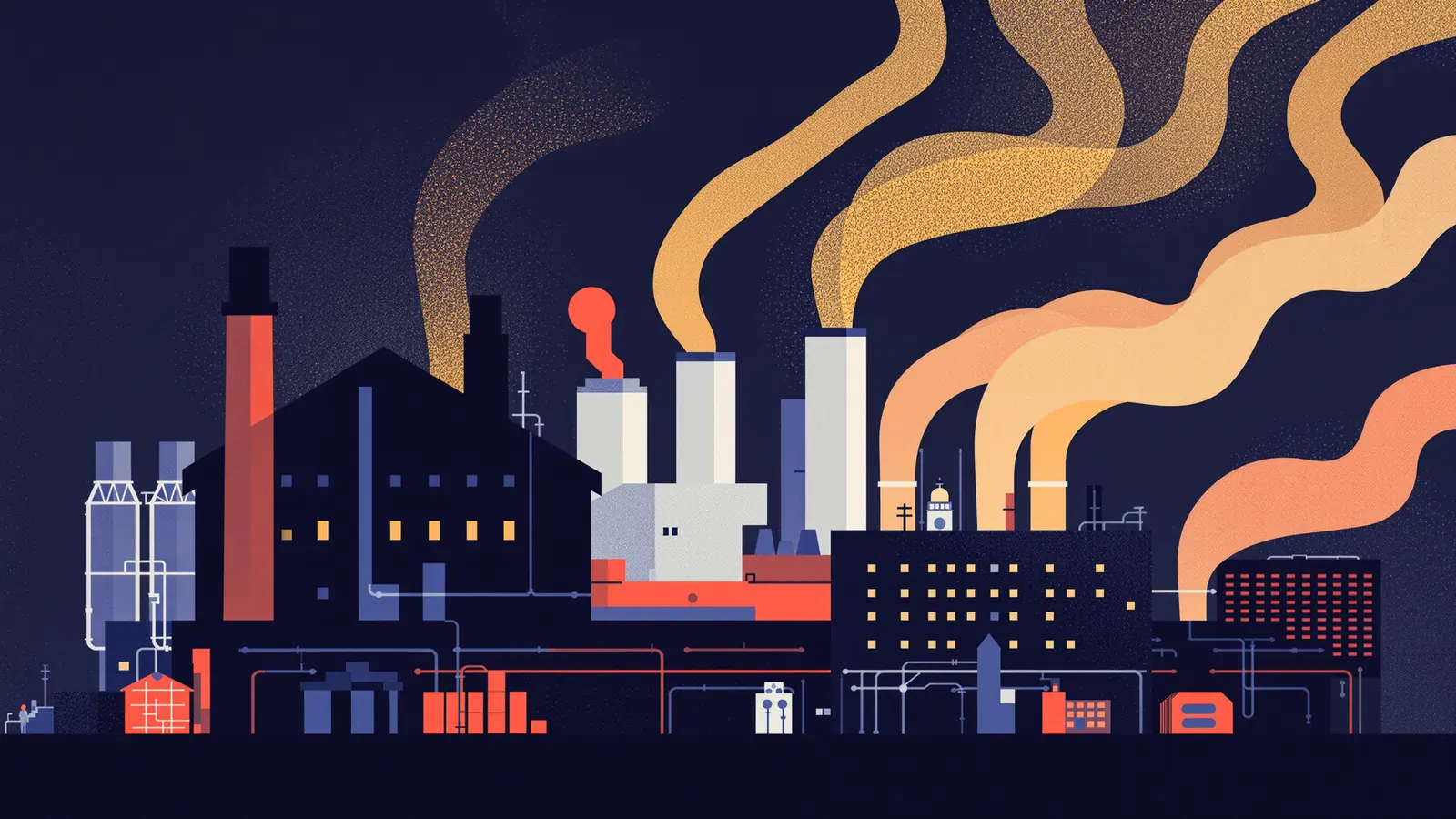
There is a specific manoeuvre at the centre of modern corporate finance that deserves to be named plainly. A company borrows money, often through a bond issue, and uses the proceeds not to build anything but to buy back its own shares. The balance sheet gets heavier with debt while the thing debt is traditionally meant to fund / new capacity, new equipment, new capability / never appears. This is not a side effect of corporate strategy. For a great many large firms, it has become the strategy itself.
The Mechanics of a Hollow Loop
The loop works like this. A company with access to credit issues debt. Rather than directing that capital toward a factory upgrade, a research programme or new hiring, it hands the cash to shareholders by retiring shares on the open market. Fewer shares outstanding means higher earnings per share, even if the underlying business has not grown at all. The share price responds, often quickly, because the market rewards the appearance of improved performance regardless of where that improvement actually came from.
Executives whose pay is tied to share price or earnings per share benefit directly and quickly. Shareholders, particularly short-term holders, benefit directly and quickly. The factory that might have been built, the production line that might have been modernised, benefits no one, because it does not exist. It was never more than a line item that got cut before anyone outside the finance department ever saw it.
This is the part that gets lost in most coverage of buyback activity. The debate tends to focus on whether buybacks are legal, or whether they are taxed correctly, or whether they should be restricted. Those are reasonable questions, but they skip past the more basic one: what did the company choose not to do instead, and who bears the cost of that choice.
Who Pays When the Factory Isn't Built
Capital investment is slow by nature. A new plant takes years to plan, build and bring to full output. A research programme might fail outright, and even the successful ones rarely pay off inside a single reporting cycle. The return, when it comes, is diffuse. It shows up in future competitiveness, in product quality, in the ability to meet demand that a leaner rival cannot. None of that shows up on a quarterly earnings call in a way that moves a share price today.
A debt-funded buyback has no such patience problem. It works immediately and it works reliably. The cost of that reliability is borne later and elsewhere: by workers whose jobs depend on a company's long-term competitive position, by customers who get a less capable product because the company that makes it quietly chose not to improve it, and by the company itself when the debt comes due and there is no new capacity, no new revenue line and no efficiency gain to help service it.
There is also a quieter cost that rarely makes it into the discussion at all: the erosion of institutional capability. A company that stops investing in plant and research does not just miss one cycle of improvement. It loses the engineers, the supplier relationships and the accumulated know-how that come from actually doing the work of building things. That capability does not return the moment a board decides it wants it back. It has to be rebuilt from nothing, usually at a cost far higher than maintaining it would ever have been.
A balance sheet can be made to look stronger in the short term by two completely opposite actions: investing in future earnings, or borrowing to return cash to shareholders now. Only one of those actually makes the company better at what it does.
The Capital Allocation Excuse Doesn't Hold
Defenders of this practice argue that borrowing for buybacks is simply efficient capital allocation, that a company with no better internal use for cash should return it to owners rather than waste it on projects with poor returns. That argument has some force when a company is genuinely out of good investment opportunities. It has none when the company is simultaneously cutting research spending, delaying maintenance on existing plants, or freezing hiring in the same divisions that would need fresh investment to stay competitive.
The pattern worth watching is not the existence of a buyback on its own. It is the sequencing: debt issued, buyback executed, capital expenditure flat or falling, all inside the same reporting period. That sequence is not a company signalling it has run out of good ideas. It is a company signalling that the people who approve spending have decided the share price matters more than the factory floor, and that they have decided this deliberately rather than arriving at it by accident.
It is worth being clear about what "no good opportunities" usually means in practice. It rarely means the engineers and product teams inside a company have failed to propose anything worth funding. More often it means those proposals exist, have been costed, and have been set aside because they would not pay back inside the window that matters to the people approving the budget. The absence of investment is not evidence of an absence of ideas.
What Investment Actually Requires
Real capital investment requires a kind of institutional patience that modern incentive structures actively punish. It requires a board willing to tell shareholders that this year's return will be lower so that the business will be stronger in five years. It requires executives willing to take a pay hit now for a benefit that may arrive after they have moved to another company entirely. Very little in the current structure of executive compensation, activist shareholder pressure or quarterly reporting rewards that kind of patience, and a great deal of it actively punishes it.
Debt-funded buybacks are not a neutral financial tool sitting alongside capital investment as an equally valid option. They are, in practice, a direct substitute, drawing on the same pool of credit and the same strategic attention that a factory upgrade or a research programme would otherwise claim. When a board chooses the buyback, it is not choosing between two equally good uses of capital. It is choosing the option that pays the people in the room, and deferring, often indefinitely, the option that pays everyone else.
This matters because the two choices are not actually symmetrical in risk. A failed investment in new capacity is at least a failure in the direction of building something. A debt-funded buyback that goes wrong, because the share price falls anyway or because the debt becomes harder to service than expected, leaves a company with nothing to show for the borrowing at all. No new plant, no new product, no new capability. Just the debt, and the absence of whatever might have been built with it.
What This Means Going Forward
None of this requires a scandal or a single bad actor to explain. It is a structural feature of how large companies are currently financed and governed, and it will keep producing the same outcome for as long as the incentives stay the same: shareholders rewarded promptly, executives rewarded promptly, and the factory that should have been built left for a future management team to explain away.
The question worth asking of any company that issues debt is not whether the borrowing is legal or whether the resulting buyback is well timed. It is simpler than that, and harder to dodge: what did this money build, and if the answer is nothing, who decided that nothing was the better outcome, and for whom.
Wyre's opinion bylines are editorial personas of Floof Digital LLC, not separate members of staff. Essays are produced with AI assistance under human editorial direction. How Wyre works.